
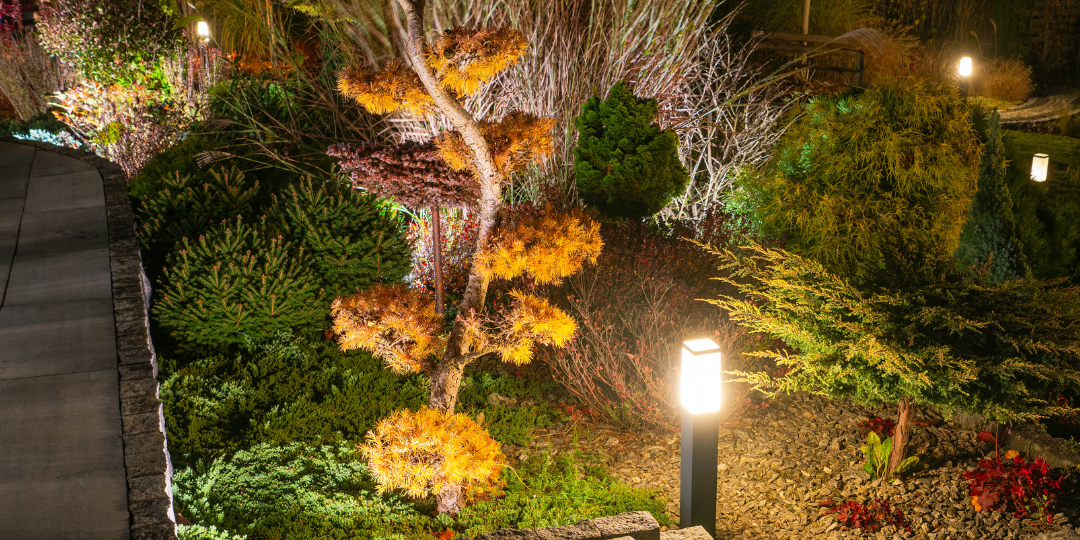
Residential landscape lighting plays a defining role in how a property looks, feels, and functions after dark. It is more than simply placing lights around a home. It is a deliberate design approach that enhances architecture, highlights landscape features, and improves safety and usability throughout outdoor spaces.
Well designed outdoor lighting brings structure and atmosphere to a property. It guides movement along pathways, draws attention to focal points such as trees or water features, and creates depth that is not visible during the day. When done correctly, it transforms a home’s exterior into a balanced and visually engaging environment.
Beyond aesthetics, residential landscape lighting also supports security and practicality. Proper illumination helps reduce dark areas around entrances, driveways, and walkways, improving visibility for both residents and guests. This combination of beauty and function is what makes outdoor lighting an essential part of modern residential design.
At Halo Outdoor, established in 2008, we specialize in designing and building high end outdoor lighting systems for residential and commercial clients. Our in house design, management, and installation team ensures each project is carefully executed from concept through completion. With the right approach, residential landscape lighting becomes a long term investment in both lifestyle and property value.
2. The Four Basic Types of Lighting in Residential Landscape Design
Understanding the four basic types of lighting is essential to creating a well balanced residential landscape lighting design. Each type serves a specific purpose, and when combined correctly, they produce a layered and visually cohesive outdoor environment.
Ambient Lighting
Ambient lighting provides the overall illumination for outdoor spaces. It sets the general brightness level and ensures that areas are safely visible at night. In residential landscape lighting, ambient lighting is often achieved through soft wash lighting, subtle path illumination, or evenly distributed fixtures that create a comfortable baseline of light.
Task Lighting
Task lighting is focused on functionality. It is used in areas where specific activities take place, such as steps, walkways, driveways, seating areas, or outdoor kitchens. In outdoor lighting design, task lighting improves safety and usability by ensuring these spaces are clearly visible and easy to navigate.
Accent Lighting
Accent lighting is used to highlight specific landscape or architectural features. This may include trees, sculptures, textured walls, or water features. In residential landscape lighting, accent lighting creates depth and visual interest by drawing attention to focal points and adding contrast within the overall design.
Decorative Lighting
Decorative lighting is primarily aesthetic and is used to enhance the visual style of a space. This can include statement fixtures, string lighting elements, or design focused installations that complement the overall outdoor lighting concept. While not always functional, decorative lighting contributes to the character and atmosphere of the property.
When these four lighting types are combined thoughtfully, they create a layered outdoor lighting design that feels intentional, balanced, and visually engaging. This is the foundation of effective residential landscape lighting and a key principle used in professional lighting services.
What Is the Rule of Thumb for Outdoor Lighting?
A common question in residential landscape lighting design is what the rule of thumb is for outdoor lighting. While every property is unique, there are several core principles that guide professional outdoor lighting design and help create balanced, visually appealing results.
Avoid Over Lighting
One of the most important rules in outdoor lighting is restraint. Too much light can flatten a space, reduce visual depth, and create glare that overwhelms the natural environment. Effective residential landscape lighting focuses on highlighting key features rather than illuminating everything equally.
A well designed system uses light selectively to guide the eye and create contrast between illuminated and shadowed areas.
Layer Light for Depth and Dimension
Professional outdoor lighting relies on layering different types of light rather than using a single uniform source. This means combining ambient, task, and accent lighting to create depth and visual interest.
Layering helps:
- Define architectural features
- Add dimension to landscaping
- Create a natural nighttime atmosphere
- Avoid harsh or overly bright spaces
This approach is a core principle in high end lighting services and is essential for achieving a polished result.
Maintain Balance and Proportion
Another key rule is maintaining balance across the property. No single area should feel overpowered by light while others are left too dark. Instead, residential landscape lighting should feel intentional and evenly distributed in a way that supports both function and aesthetics.
Balance also applies to fixture size, brightness levels, and spacing. Proper proportion ensures that outdoor lighting feels integrated rather than intrusive.
Respect Natural Darkness
Good outdoor lighting design does not eliminate darkness completely. Instead, it uses darkness as part of the design. Shadows help define shapes, add contrast, and create mood. Over lighting removes this contrast and can make a space feel flat and unnatural.
Professional designers often use darkness strategically to enhance focal points and improve overall composition.
Consider Viewing Angles
Outdoor lighting is experienced from multiple viewpoints, including inside the home, from the street, and within the landscape itself. A key rule of thumb is to design lighting that looks natural from all angles, not just one perspective.
This includes controlling glare, hiding light sources where possible, and ensuring that fixtures support the overall visual experience.
Keep Function and Aesthetics in Balance
Residential landscape lighting should always serve both practical and visual purposes. Pathways, steps, and entry points must remain safe and visible, while architectural and landscape features are enhanced through thoughtful illumination.
At Halo Outdoor, we apply these principles to every project, ensuring that outdoor lighting systems are not only visually striking but also functional, efficient, and built to last through professional lighting services.
Common Three Point Lighting Mistakes in Outdoor Lighting Design
Three point lighting is a concept often used in photography and film, but the principles also apply to residential landscape lighting and outdoor lighting design. It is based on balancing light sources to create depth, clarity, and visual focus. When these principles are misapplied outdoors, the result is often uneven, harsh, or confusing lighting.
Understanding common mistakes helps improve both design quality and long term performance.
Overlighting the Main Subject
One of the most frequent mistakes in outdoor lighting design is placing too much emphasis on a single focal point. For example, a tree, architectural feature, or entryway may be illuminated too intensely while the surrounding space remains dark or underdeveloped.
This creates:
- Loss of visual balance
- Harsh focal points that feel unnatural
- Reduced depth in the overall design
In residential landscape lighting, effective design distributes attention rather than concentrating it in one place.
Ignoring Shadow and Contrast
Shadows are an essential part of outdoor lighting design. They help define shape, texture, and depth. A common mistake is attempting to eliminate shadows entirely, which results in a flat and lifeless appearance.
Proper lighting services use contrast intentionally by:
- Allowing natural shadow patterns to form
- Highlighting textures through angled lighting
- Balancing illuminated and darker areas
Without contrast, outdoor lighting loses its visual interest and dimensional quality.
Poor Placement of Light Angles
Incorrect fixture placement is another common issue in residential landscape lighting systems. Lights that are aimed too directly at a subject or positioned at the wrong height can create glare, uneven illumination, or unwanted hotspots.
Typical problems include:
- Fixtures aimed directly at viewing angles
- Excessively steep or shallow lighting angles
- Inconsistent beam spread across the design
Professional installation focuses on positioning lights to enhance features without drawing attention to the fixtures themselves.
Lack of Hierarchy in Lighting Design
Three point lighting relies on establishing a clear visual hierarchy. In outdoor lighting, this means defining what should stand out, what should support it, and what should remain subtle.
A common mistake is treating all elements equally, which leads to a flat and visually confusing result.
Effective residential landscape lighting establishes hierarchy by:
- Prioritizing key architectural or landscape features
- Supporting focal points with secondary lighting
- Using ambient light to unify the space
Overdependence on a Single Lighting Type
Relying too heavily on one type of lighting, such as accent or flood lighting, is another design mistake. Without a mix of ambient, task, and accent lighting, the system can feel one dimensional and artificial.
Balanced outdoor lighting design integrates multiple lighting types to create a natural and layered effect.
At Halo Outdoor, we apply professional lighting services to avoid these common issues, ensuring every residential landscape lighting system is carefully balanced, visually intentional, and designed to enhance both structure and atmosphere.
What Light Fixtures Are Outdated?
As residential landscape lighting has evolved, so too have the fixtures and technologies used to design effective outdoor lighting systems. Many older fixture styles and technologies are now considered outdated because they fail to deliver the performance, efficiency, or visual refinement expected in modern lighting services.
Understanding what to avoid is just as important as knowing what to install.
Overly Bulky Path Lights
Traditional path lights with oversized housings and exposed bulbs are now largely outdated. These fixtures often produce harsh or uneven light and can visually clutter a landscape during the day.
Common issues include:
- Excessive glare at eye level
- Poor light control and distribution
- Visually intrusive daytime appearance
Modern residential landscape lighting favors low profile, well shielded fixtures that blend into the environment.
High Intensity Flood Lights
Flood lights that produce a wide, harsh beam with little control are another outdated approach in outdoor lighting design. While they may illuminate large areas, they often create flat, overexposed lighting with minimal depth.
Problems include:
- Loss of architectural detail
- Harsh shadows and glare
- Lack of visual layering
Today’s outdoor lighting designs use controlled beam angles and targeted illumination instead of broad uncontrolled light.
Plastic Based Fixtures
Low quality plastic fixtures were once common in residential landscape lighting systems, but they tend to degrade quickly under UV exposure and weather conditions.
Over time, they can:
- Fade or discolor
- Become brittle and crack
- Fail to maintain proper alignment
Modern lighting services prioritize durable materials such as brass, copper, and high grade aluminum for long term performance.
Exposed or Visible Light Sources
Fixtures that expose the bulb directly without proper shielding are now considered outdated. These designs often produce glare and reduce overall visual comfort in outdoor lighting environments.
Modern designs conceal the light source while still delivering effective illumination, improving both aesthetics and usability.
Halogen Based Systems
Halogen lighting was once widely used in residential landscape lighting, but it is now largely replaced by LED technology. Halogen systems consume more energy, generate more heat, and require more frequent maintenance.
Compared to LED outdoor lighting, halogen systems:
- Have shorter lifespans
- Require more frequent bulb replacements
- Are less energy efficient
Lack of Design Integration
Older lighting systems often treated fixtures as standalone elements rather than part of a cohesive design. This results in inconsistent lighting patterns and a lack of visual flow across the property.
Modern residential landscape lighting focuses on integration, where every fixture supports a unified design intent.
At Halo Outdoor, we design and install modern outdoor lighting systems that replace outdated approaches with refined, efficient, and long lasting solutions. Through professional lighting services, we ensure each system is built for both performance and visual impact.
What Are the Newest Outdoor Light Trends?
Residential landscape lighting continues to evolve as design preferences, technology, and performance expectations advance. Today’s outdoor lighting trends focus on simplicity, efficiency, and creating a more natural visual experience that enhances architecture and landscape without overwhelming it.
Minimalist Fixture Design
One of the strongest trends in residential landscape lighting is the shift toward minimal, low profile fixtures. Instead of drawing attention to the hardware, modern designs aim to make fixtures nearly invisible during the day while delivering precise illumination at night.
This approach results in:
- Cleaner landscape aesthetics
- Less visual clutter in garden spaces
- Greater focus on architecture and natural features
Minimalist design is now a core standard in premium lighting services.
Warm Color Temperature Lighting
Cold, bluish lighting is increasingly being replaced with warmer tones that feel more natural and inviting. Warm white outdoor lighting enhances texture and creates a comfortable nighttime atmosphere for residential spaces.
Benefits include:
- More natural appearance for landscapes and architecture
- Improved comfort for outdoor living areas
- Softer transitions between light and shadow
This trend is especially popular in high end residential landscape lighting projects.
Hidden and Integrated Lighting
Modern outdoor lighting design often focuses on concealing light sources within the landscape or architecture itself. Instead of visible fixtures, light is integrated into steps, walls, planters, and structural elements.
Common examples include:
- Recessed step lighting
- Wall integrated grazing light
- Concealed uplighting for trees and features
This technique enhances visual impact while maintaining a clean and sophisticated look.
Smart Lighting Control Systems
Automation and smart control systems are becoming standard in residential landscape lighting. Homeowners can now adjust brightness, schedules, and zones through mobile devices or automated settings.
Key advantages include:
- Increased energy efficiency
- Customizable lighting scenes
- Greater control over outdoor lighting schedules
Smart systems are often included in professional lighting services to improve convenience and performance.
Energy Efficient LED Outdoor Lighting
LED technology continues to dominate modern outdoor lighting due to its efficiency and long lifespan. Compared to older systems, LED fixtures consume less energy while delivering more consistent light quality.
This trend supports:
- Reduced maintenance needs
- Lower energy consumption
- Longer lasting residential landscape lighting systems
Seasonal and Experience Based Design
Another growing trend is designing outdoor lighting systems that adapt to different seasons or occasions. This includes subtle adjustments for entertaining, security, or seasonal enhancements such as Holiday Lighting integration.
Lighting is no longer static. It is becoming a flexible part of the outdoor living experience.
At Halo Outdoor, we incorporate these modern design trends into every project, ensuring that residential landscape lighting systems are both timeless and forward thinking. Through expert lighting services, we create outdoor lighting environments that are refined, efficient, and tailored to each property.
Residential Landscape Lighting Maintenance and Longevity Considerations
Even the most well designed residential landscape lighting system requires ongoing care to maintain performance, appearance, and reliability over time. Outdoor lighting is constantly exposed to environmental conditions that gradually affect fixtures, wiring, and overall system efficiency. This is why maintenance is a critical part of protecting the long term value of any installation.
Why Maintenance Matters for Outdoor Lighting Systems
Regular maintenance ensures that residential landscape lighting continues to function as intended while preserving the original design quality. Without it, small issues such as dirt buildup, loose connections, or misaligned fixtures can slowly reduce system performance.
Consistent upkeep helps:
- Maintain consistent light output across the property
- Prevent premature fixture failure
- Preserve design intent and visual balance
- Reduce the need for major repairs
Professional lighting services often include scheduled inspections to ensure systems remain in optimal condition.
Common Maintenance Needs in Residential Landscape Lighting
Over time, outdoor lighting systems may require minor adjustments or repairs due to natural wear and environmental exposure. These issues are often easy to address when caught early.
Typical maintenance tasks include:
- Cleaning lenses and fixture housings
- Repositioning shifted fixtures
- Checking wiring connections for corrosion or wear
- Replacing aging bulbs or LED components
- Testing timers and control systems
These small actions play a significant role in long term system reliability.
Environmental Impact on Outdoor Lighting
Outdoor lighting systems are exposed to a wide range of environmental conditions that can impact performance. Weather, soil movement, irrigation, and plant growth all contribute to gradual changes in how a system operates.
Key environmental factors include:
- Moisture and seasonal rainfall
- Temperature fluctuations
- Vegetation growth blocking light output
- Soil settling or shifting around fixtures
Addressing these factors through routine maintenance helps preserve both function and appearance.
Extending System Lifespan Through Proper Care
A well maintained residential landscape lighting system can last significantly longer than one that is neglected. While individual components such as bulbs or drivers may eventually need replacement, the overall system can remain highly effective for many years with proper care.
Key longevity practices include:
- Scheduling periodic professional inspections
- Addressing minor issues before they escalate
- Upgrading outdated components when needed
- Maintaining clean and properly aligned fixtures
The Role of Professional Lighting Services
While some maintenance tasks can be performed by property owners, professional lighting services provide a deeper level of system evaluation and care. Trained technicians can identify issues that are not immediately visible, such as voltage drops, internal corrosion, or hidden wiring damage.
At Halo Outdoor, we approach maintenance as an extension of design quality. Since 2008, our team has supported residential landscape lighting systems with long term care strategies that preserve both performance and aesthetic integrity. Proper maintenance ensures that outdoor lighting continues to enhance a property year after year without compromise.
Residential Landscape Lighting Maintenance and Longevity Considerations
Even the most well designed residential landscape lighting system requires ongoing care to maintain performance, appearance, and reliability over time. Outdoor lighting is constantly exposed to environmental conditions that gradually affect fixtures, wiring, and overall system efficiency. This is why maintenance is a critical part of protecting the long term value of any installation.
Why Maintenance Matters for Outdoor Lighting Systems
Regular maintenance ensures that residential landscape lighting continues to function as intended while preserving the original design quality. Without it, small issues such as dirt buildup, loose connections, or misaligned fixtures can slowly reduce system performance.
Consistent upkeep helps:
- Maintain consistent light output across the property
- Prevent premature fixture failure
- Preserve design intent and visual balance
- Reduce the need for major repairs
Professional lighting services often include scheduled inspections to ensure systems remain in optimal condition.
Common Maintenance Needs in Residential Landscape Lighting
Over time, outdoor lighting systems may require minor adjustments or repairs due to natural wear and environmental exposure. These issues are often easy to address when caught early.
Typical maintenance tasks include:
- Cleaning lenses and fixture housings
- Repositioning shifted fixtures
- Checking wiring connections for corrosion or wear
- Replacing aging bulbs or LED components
- Testing timers and control systems
These small actions play a significant role in long term system reliability.
Environmental Impact on Outdoor Lighting
Outdoor lighting systems are exposed to a wide range of environmental conditions that can impact performance. Weather, soil movement, irrigation, and plant growth all contribute to gradual changes in how a system operates.
Key environmental factors include:
- Moisture and seasonal rainfall
- Temperature fluctuations
- Vegetation growth blocking light output
- Soil settling or shifting around fixtures
Addressing these factors through routine maintenance helps preserve both function and appearance.
Extending System Lifespan Through Proper Care
A well maintained residential landscape lighting system can last significantly longer than one that is neglected. While individual components such as bulbs or drivers may eventually need replacement, the overall system can remain highly effective for many years with proper care.
Key longevity practices include:
- Scheduling periodic professional inspections
- Addressing minor issues before they escalate
- Upgrading outdated components when needed
- Maintaining clean and properly aligned fixtures
The Role of Professional Lighting Services
While some maintenance tasks can be performed by property owners, professional lighting services provide a deeper level of system evaluation and care. Trained technicians can identify issues that are not immediately visible, such as voltage drops, internal corrosion, or hidden wiring damage.
At Halo Outdoor, we approach maintenance as an extension of design quality. Since 2008, our team has supported residential landscape lighting systems with long term care strategies that preserve both performance and aesthetic integrity. Proper maintenance ensures that outdoor lighting continues to enhance a property year after year without compromise.
Holiday Lighting and Seasonal Design Integration
Residential landscape lighting is often viewed as a permanent design feature, but it can also serve as the foundation for seasonal enhancements. One of the most common seasonal additions is Holiday Lighting, which brings temporary festive illumination into an existing outdoor lighting system.
When planned correctly, seasonal lighting can enhance a property without disrupting the core design or performance of the permanent system.
Integrating Holiday Lighting with Residential Landscape Lighting
A well designed residential landscape lighting system can support seasonal updates without requiring major changes or additional infrastructure. The key is thoughtful planning during the initial design phase.
Proper integration allows:
- Safe connection to existing outdoor lighting systems
- Balanced visual appearance during seasonal changes
- Reduced strain on electrical components
- Cleaner installation and removal processes
Professional lighting services often plan for seasonal flexibility to ensure systems remain adaptable throughout the year.
Protecting System Performance During Seasonal Use
Holiday Lighting installations can place additional demand on electrical systems if not managed properly. Extra fixtures, extensions, or temporary wiring must be installed carefully to avoid overloading circuits or compromising existing outdoor lighting performance.
Best practices include:
- Using outdoor rated components
- Avoiding overloaded transformers
- Securing temporary fixtures safely
- Ensuring connections remain weather resistant
These precautions help protect both the permanent residential landscape lighting system and the seasonal additions.
Maintaining Design Consistency
One of the challenges of Holiday Lighting is maintaining the visual integrity of the original outdoor lighting design. Poorly placed or overly bright seasonal lighting can disrupt the balance of a carefully designed landscape.
To maintain consistency:
- Match color temperature where possible
- Avoid excessive brightness compared to permanent lighting
- Focus on enhancing rather than overpowering existing features
- Keep lighting zones clearly defined
This approach ensures that seasonal elements complement rather than compete with the permanent design.
Seasonal Transition and Removal
Once the holiday season ends, proper removal and storage of Holiday Lighting is essential. Temporary fixtures should be carefully taken down to avoid damaging the permanent residential landscape lighting system.
Key steps include:
- Disconnecting temporary wiring safely
- Inspecting fixtures for wear or damage
- Storing components in a dry, protected environment
- Rechecking permanent systems after removal
Year Round Planning with Professional Support
Seasonal lighting is most effective when it is considered as part of a year round design strategy. This is where professional lighting services add significant value. By planning for both permanent and seasonal use, systems can remain flexible, efficient, and visually consistent throughout the year.
At Halo Outdoor, we design residential landscape lighting systems that support both everyday elegance and seasonal enhancements. Since 2008, our team has helped clients create outdoor lighting environments that transition seamlessly between functional lighting and Holiday Lighting displays without compromising quality or design intent.
Why Professional Lighting Services Matter
Residential landscape lighting is more than selecting fixtures and placing lights around a property. It is a technical and design driven process that requires careful planning, precise installation, and long term system understanding. This is where professional lighting services become essential.
A professionally designed and installed outdoor lighting system performs more consistently, lasts longer, and delivers a more refined visual result than a system assembled without expert guidance.
Design Expertise and Visual Balance
One of the main advantages of professional lighting services is design expertise. Effective residential landscape lighting requires an understanding of proportion, layering, and spatial balance.
Professionals consider:
- How light interacts with architecture and landscaping
- How brightness levels shift across different zones
- How to create depth without overlighting
- How to guide visual attention naturally
This level of design precision is difficult to achieve without experience in outdoor lighting systems.
Technical Installation and System Reliability
Proper installation is critical for long term performance. Outdoor lighting systems involve low voltage wiring, transformers, connectors, and weather exposed components that must be installed correctly to ensure safety and durability.
Professional installation helps ensure:
- Secure and weather resistant wiring connections
- Proper transformer sizing and load distribution
- Reduced risk of system failure
- Consistent performance across all lighting zones
These technical elements directly impact how well residential landscape lighting performs over time.
Avoiding Common DIY Mistakes
Without professional guidance, residential landscape lighting systems often suffer from common issues that affect both appearance and functionality.
These include:
- Uneven lighting distribution
- Excessive glare or brightness
- Poor fixture placement
- Inconsistent system performance
Lighting services help prevent these problems by applying proven design and installation methods from the start.
Long Term Maintenance and System Support
Outdoor lighting systems require ongoing attention to remain effective. Professional lighting services often include maintenance support that ensures systems continue to perform as intended.
This includes:
- Periodic inspections and adjustments
- Cleaning and fixture realignment
- Electrical troubleshooting
- System upgrades when needed
Regular support helps extend the life of the system and maintain consistent performance.
The Halo Outdoor Approach
At Halo Outdoor, established in 2008, we specialize in delivering complete residential landscape lighting solutions through expert design, management, and installation. Our in house team ensures every project is executed with precision from concept to completion.
We approach outdoor lighting as a long term investment in both property value and lifestyle. Through professional lighting services, we help clients achieve systems that are not only visually striking but also reliable, efficient, and built to last.
Elevating Residential Landscape Lighting with Expert Design
Residential landscape lighting is a powerful design element that shapes how a property is experienced after dark. When thoughtfully planned and professionally executed, it enhances architecture, improves safety, and creates a cohesive outdoor environment that feels both functional and visually refined.
Throughout this article, we have explored the key principles that define successful outdoor lighting design. From understanding the four basic types of lighting to applying proper layering techniques, avoiding outdated fixtures, and recognizing modern trends, each element contributes to a more intentional and effective lighting system.
We also looked at common design mistakes, including poor balance, incorrect fixture placement, and over reliance on a single lighting approach. These issues highlight the importance of thoughtful planning and technical precision in residential landscape lighting.
Equally important is understanding how outdoor lighting systems evolve over time. Maintenance, seasonal adjustments, and the integration of Holiday Lighting all play a role in preserving performance and visual consistency. With proper care, a well designed system can remain effective and beautiful for many years.
Ultimately, the difference between a basic installation and a truly exceptional result comes down to expertise. Professional lighting services ensure that every detail, from design to installation and long term maintenance, is handled with care and precision.
At Halo Outdoor, established in 2008, we specialize in creating high end outdoor lighting systems tailored to both residential and commercial properties. Our in house design, management, and installation team delivers complete solutions from concept to completion. We believe residential landscape lighting should not only illuminate a space but elevate it, creating lasting value and a refined nighttime experience for every property.