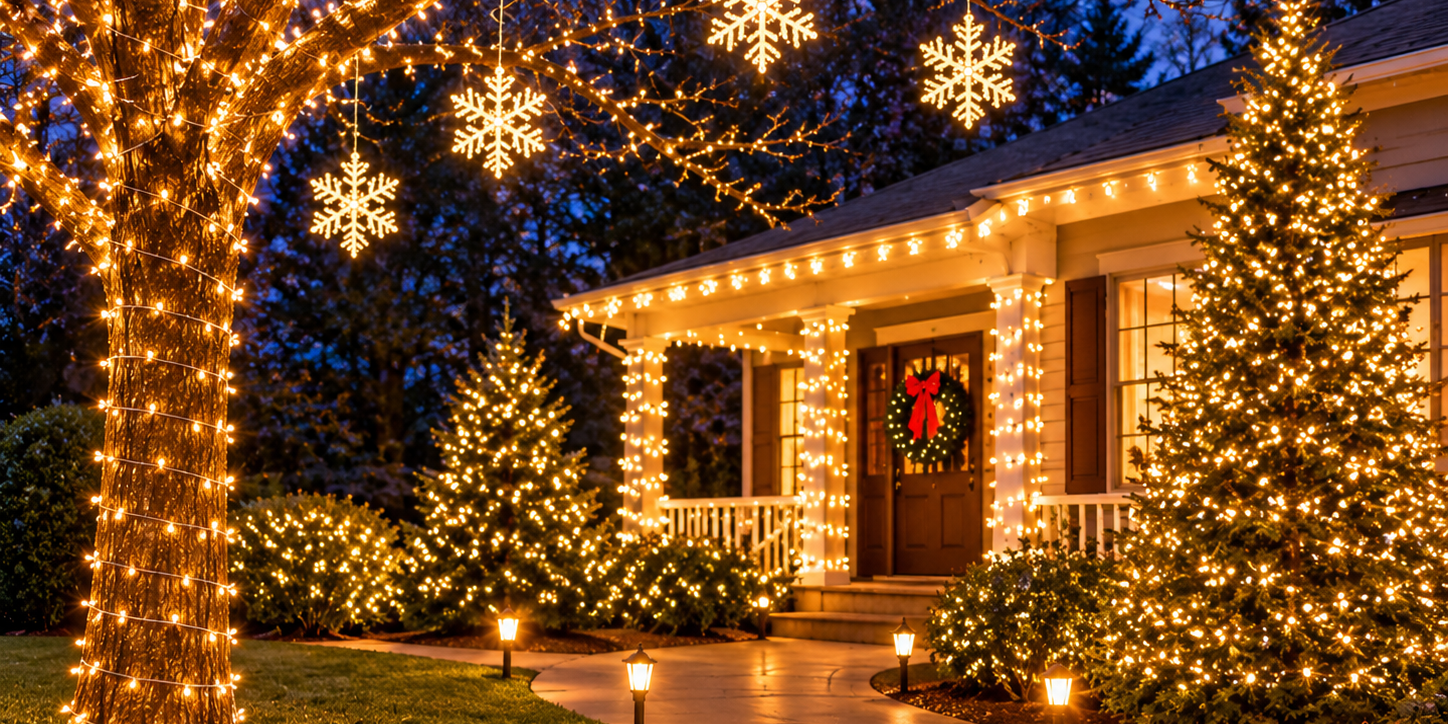
LED holiday lights are a popular way to transform homes, gardens, and commercial properties into welcoming, festive spaces. From illuminating rooflines and trees to highlighting entrances and landscape features, the right lighting can create a beautiful holiday display while complementing the property’s existing design. With their energy efficiency, long service life, and versatility, LED holiday lights have become a preferred choice for many homeowners and businesses.
However, creating an attractive display involves more than choosing the right colours and decorations. Understanding how to install, operate, and maintain LED Christmas lights safely is equally important. Problems such as lights failing to turn on, remaining illuminated after being switched off, or developing electrical faults can be frustrating. It is also essential to understand fire risks, appropriate operating times, and how long seasonal lights should remain outdoors.
Whether you are planning a simple festive display for your home or a more elaborate arrangement for a commercial property, making informed lighting decisions can help you achieve a safer and more effective result. Choosing suitable products, following manufacturer instructions, and using appropriate controls can improve the performance and reliability of your holiday lighting.
At Halo Outdoor, we understand how carefully designed Outdoor lighting can transform a property’s appearance. Established in 2008, our company specialises in bespoke outdoor lighting systems for residential and commercial clients, with an experienced in house team providing design, management, and installation from concept to completion.
In this guide, we explore the benefits of LED holiday lights, explain how to troubleshoot common problems, and answer important questions about electrical safety, overnight operation, and seasonal maintenance. We also look at how professional Holiday Lighting and specialist Lighting services can help you create a festive display that looks impressive while supporting the safety and functionality of your outdoor space.
What Are LED Holiday Lights?
LED holiday lights are decorative lights that use light emitting diodes (LEDs) to produce illumination. They are widely used during Christmas and other festive occasions to decorate homes, gardens, commercial buildings, trees, pathways, and outdoor architectural features.
Unlike traditional incandescent Christmas lights, which produce light by heating a filament, LEDs generate light using semiconductor technology. This allows them to use less electricity and produce significantly less heat during normal operation, making them a popular choice for seasonal displays.
Available in a wide range of colours, shapes, sizes, and designs, LED holiday lights offer considerable flexibility for creating displays that suit different properties and decorating styles.
What Are the Benefits of LED Holiday Lights?
LED holiday lights offer several advantages over traditional lighting options.
- Energy efficiency: LED lights generally consume less electricity than comparable incandescent lights, helping reduce the energy required to operate a festive display.
- Reduced heat output: LEDs typically produce much less heat than incandescent bulbs, although electrical faults and unsuitable installation can still create safety risks.
- Long service life: Quality LED products can provide many seasons of use when installed, operated, and stored according to the manufacturer’s instructions.
- Versatile designs: From warm white string lights to colourful decorative features, LEDs are available in styles suitable for a variety of festive themes.
- Indoor and outdoor options: Products are available for different environments, provided they are specifically rated for their intended location.
- Flexible control options: Some LED lighting systems support timers, dimmers, remote controls, or smart home integration, depending on the product and its compatibility.
These benefits make LED holiday lights a practical option for both small residential decorations and larger commercial displays.
What Is the Difference Between LED and Traditional Christmas Lights?
Understanding the differences between LED and incandescent Christmas lights can help you choose the right products for your needs.
| Feature | LED holiday lights | Incandescent Christmas lights |
| Energy consumption | Generally lower | Generally higher |
| Heat output | Typically much lower | Higher during normal operation |
| Service life | Often longer | Generally shorter |
| Available styles | Wide variety of colours and designs | Wide variety of colours and designs |
| Running costs | Often lower for comparable displays | Often higher for comparable displays |
| Safety considerations | Damaged wiring and faulty connections can still create hazards | Heat and electrical faults can create hazards |
Actual performance depends on the specific product, its quality, and how it is used. LED lights are not automatically safe in every situation, so it remains important to check product ratings and follow the manufacturer’s instructions.
Types of LED Holiday Lights
There are several types of LED holiday lights to consider when planning your display.
LED string lights
String lights are among the most versatile options for festive decorating. They can be wrapped around trees, draped along railings, arranged around windows, or used to highlight rooflines.
LED icicle lights
Designed to resemble hanging icicles, these lights are commonly installed along roof edges, gutters, and covered outdoor structures to create a traditional Christmas appearance. Always use suitable mounting methods and follow the manufacturer’s installation guidance.
LED net lights
Net lights are designed to cover shrubs and hedges more evenly than individual strands. They can simplify decorating and create a consistent appearance across larger areas of planting.
LED pathway lights
Pathway lights help define entrances, garden paths, and walkways while adding a festive touch. Choose products designed for outdoor conditions and ensure that cables do not create trip hazards.
LED architectural and landscape lighting
LED spotlights and other outdoor fixtures can highlight trees, building features, garden structures, and entrances. These options can complement seasonal decorations while also contributing to a property’s wider Outdoor lighting scheme.
Smart LED holiday lights
Some modern LED products offer programmable colours, adjustable effects, scheduling, and remote operation. These features can make it easier to coordinate a display and manage when the lights are switched on or off.
Are All LED Holiday Lights Suitable for Outdoor Use?
No. Some LED holiday lights are designed exclusively for indoor use, while others are manufactured for outdoor conditions. Using indoor lights outside can expose electrical components and connections to moisture, temperature changes, and other environmental conditions they were not designed to withstand.
Before purchasing or installing LED holiday lights, check the following:
- Product rating: Confirm that the lights are specifically approved for the intended indoor or outdoor environment.
- Weather protection: Check the manufacturer’s guidance on moisture resistance and any applicable ingress protection rating.
- Power supply: Ensure that the power adapter, controller, and other electrical components are suitable for the installation location.
- Connections: Protect electrical connections as directed by the manufacturer.
- Condition: Never install lights with damaged insulation, exposed wiring, broken plugs, or signs of overheating.
For larger displays or installations involving rooflines, extensive landscaping, or permanent fixtures, professional advice can help ensure that the lighting is appropriate for the property.
Choosing LED Holiday Lights for Your Property
The best LED holiday lights depend on the appearance you want to achieve, the size of your property, and whether the display will be installed indoors or outdoors. A simple string of warm white lights may be ideal for a residential entrance, while a commercial property may benefit from a more coordinated design featuring roofline lighting, illuminated landscaping, and architectural accents.
At Halo Outdoor, we specialise in bespoke outdoor lighting systems for residential and commercial properties. Our in house Design, Management, and Installation team can help clients consider how seasonal Holiday Lighting can complement the property’s architecture and existing landscape.
By choosing suitable products and planning your display carefully, you can enjoy the visual appeal of LED holiday lights while making informed decisions about energy efficiency, durability, and safety.
Why Choose LED Holiday Lights for Your Outdoor Space?
LED holiday lights offer an effective way to make your home or commercial property feel welcoming and festive during the holiday season. Whether you want to create a warm glow around your entrance, illuminate garden trees, or design an eye catching display for a business, LED lighting provides flexibility, efficiency, and a wide range of creative possibilities.
Beyond their decorative appeal, LED holiday lights can also complement your existing Outdoor lighting, helping you create a cohesive appearance that works with your property’s architecture and landscape.
Here are some of the main reasons to choose LED holiday lights for your outdoor space.
1. Improve Energy Efficiency and Manage Running Costs
One of the biggest advantages of LED holiday lights is their energy efficiency. LEDs generally use considerably less electricity than comparable incandescent lights, making them a practical choice for displays that operate for several hours each evening.
The actual savings depend on the wattage of your lights, the size of your display, and how long you leave them switched on. However, replacing older incandescent decorations with suitable LED alternatives can help reduce electricity consumption without sacrificing visual impact.
You can further manage energy use by:
- Choosing energy efficient LED products from reputable manufacturers.
- Using timers to switch decorative lights off at a set time.
- Dividing your display into separate zones so you illuminate only the areas you need.
- Selecting compatible smart controls to manage operating schedules.
- Avoiding unnecessarily bright or excessive lighting.
These simple measures can help you enjoy a festive display while keeping energy consumption under control.
2. Enjoy a Longer Service Life
Quality LED holiday lights can last for many seasons when they are used and maintained correctly. Their long service life can reduce the need for frequent replacements, helping you save time and money over the years.
However, durability depends on more than the LED itself. Wiring, connectors, controllers, power supplies, and weather exposure can all affect how long a set of lights remains reliable.
To help extend the life of your holiday lighting:
- Inspect lights and cables before each installation.
- Replace damaged products rather than attempting unsafe repairs.
- Use lights specifically designed for outdoor conditions.
- Follow the manufacturer’s guidance on installation and operating temperatures.
- Remove, clean, and store seasonal lights carefully when the holidays are over.
Taking these precautions can help preserve the appearance and performance of your display from one season to the next.
3. Create a Beautiful and Versatile Festive Display
LED holiday lights are available in a wide variety of styles, colours, brightness levels, and configurations. This makes it easier to create a display that complements your property’s character and your preferred decorating style.
For a traditional look, warm white lights can create a welcoming atmosphere around entrances, rooflines, and garden trees. Coloured LEDs can introduce a more playful appearance, while carefully coordinated lighting can create a contemporary display for residential or commercial settings.
Consider these outdoor decorating ideas:
- Rooflines and eaves: Outline the shape of your property to create a defined festive appearance.
- Trees and shrubs: Wrap suitable lights around branches or use net lights to illuminate hedges.
- Pathways and entrances: Add subtle illumination to help visitors navigate your property.
- Architectural features: Highlight columns, façades, and other distinctive details.
- Commercial buildings: Create a polished seasonal display that complements your business identity.
- Outdoor seating areas: Introduce decorative lighting to make patios and covered entertaining spaces feel more inviting.
A balanced design is often more effective than covering every surface with lights. Focusing on a few key features can create visual interest without overwhelming the property.
4. Benefit from Lower Heat Output
LED holiday lights typically produce significantly less heat than traditional incandescent Christmas lights. This makes them a useful option for many decorative applications, including displays around suitable foliage and architectural features.
However, lower heat output does not mean that LED lights are completely free from fire risk. Damaged wiring, faulty power supplies, overloaded circuits, poor connections, or products used incorrectly can still create hazards.
For safer operation, always follow the manufacturer’s instructions, inspect your lights before use, and keep them away from materials or locations that are unsuitable for the product. Never use damaged lights or electrical accessories.
Choosing LED products and using them correctly can help reduce certain risks, but good electrical safety practices remain essential.
5. Choose Lighting for Different Outdoor Environments
LED holiday lights can be used in a variety of outdoor settings, provided the products are suitable for their intended environment.
For residential properties, they can highlight garden features, illuminate entrances, and create a festive atmosphere around the home. For commercial buildings, coordinated Holiday Lighting can help create a welcoming appearance for customers, visitors, and employees.
When selecting lights for outdoor use, consider:
- Weather resistance: Choose products rated for the conditions where they will be installed.
- Temperature tolerance: Check the manufacturer’s specified operating conditions, particularly in areas exposed to freezing temperatures.
- Installation method: Use suitable clips, brackets, and mounting accessories that do not damage cables or building materials.
- Electrical connections: Ensure connections are protected in accordance with the manufacturer’s requirements.
- Access and maintenance: Consider how lights will be inspected, removed, and maintained throughout the season.
The right product for a sheltered porch may not be suitable for an exposed roofline or an open garden. Selecting lights according to their installation environment is essential for dependable performance.
6. Complement Your Existing Outdoor Lighting
Seasonal decorations can look even more effective when they work alongside your permanent Outdoor lighting system. Instead of treating festive lights as a separate feature, consider how they can complement the illumination already present around your property.
For example, existing landscape lighting may highlight trees and planting, while temporary LED string lights add a festive accent. Architectural lighting can emphasise the structure of a building, with seasonal decorations providing additional colour and character.
To achieve a coordinated appearance:
- Choose colours that complement your property’s exterior and existing fixtures.
- Avoid excessive brightness that competes with permanent lighting.
- Use separate controls for decorative and everyday lighting where possible.
- Direct light carefully to reduce glare and unwanted light entering neighbouring properties.
- Consider how the display will look from the street as well as from inside the property.
A thoughtful combination of permanent and seasonal lighting can create an attractive display without requiring a complete change to your existing landscape.
7. Consider Professional Holiday Lighting Services
Small decorative displays may be suitable for a do it yourself approach, but larger or more complex installations can require careful planning, appropriate equipment, and specialist knowledge.
Professional Lighting services can help with product selection, layout, installation methods, electrical considerations, and coordination with existing outdoor fixtures. This can be particularly useful when decorating large properties, commercial buildings, rooflines, or extensive landscaped areas.
At Halo Outdoor, we have specialised in bespoke outdoor lighting systems since 2008. Our in house Design, Management, and Installation team works with residential and commercial clients, taking projects from concept to completion.
Whether you are planning a seasonal display or considering a broader outdoor lighting upgrade, a carefully designed approach can help ensure that your lighting complements your property and meets your practical needs.
Make Your Outdoor Space Shine This Holiday Season
LED holiday lights combine energy efficiency, versatility, and attractive lighting effects, making them a popular choice for festive outdoor displays. With the right products, sensible operating schedules, and careful installation, you can create a display that looks beautiful while supporting safe and efficient use.
By combining seasonal decorations with a considered Outdoor lighting design, you can make your property feel welcoming throughout the holidays and beyond.
Why Won’t My LED Christmas Lights Work?
LED Christmas lights are generally reliable, but like any electrical product, they can occasionally stop working. If your LED holiday lights will not turn on, flicker unexpectedly, or only illuminate in certain sections, the problem may be caused by a loose connection, a blown fuse, a faulty power supply, or damaged wiring.
Before replacing your lights, it is worth carrying out a few simple checks. Many common problems can be identified by following the manufacturer’s troubleshooting instructions. However, if you notice exposed wires, burning smells, scorch marks, or signs of overheating, disconnect the lights from the power source if it is safe to do so and stop using them.
1. Check the Power Source
The first step is to confirm that your LED Christmas lights are receiving power.
Check that the plug is fully inserted into a working outlet and that any switches controlling the outlet are turned on. If you are using an extension lead or outdoor power connection, check that it is connected correctly and suitable for the intended environment.
You can also check whether a household circuit breaker has tripped. If it trips repeatedly, do not keep resetting it. Have the cause investigated by a qualified electrician.
For outdoor displays, ensure that electrical connections and power supplies are protected as required by the manufacturer. Never handle electrical connections with wet hands or while standing in water.
2. Inspect the Plug and Replaceable Fuse
Some LED Christmas lights include a small replaceable fuse inside the plug. If the fuse has blown, the lights may stop working entirely.
To investigate this issue:
- Disconnect the lights from the power source.
- Check the manufacturer’s instructions to determine whether the plug contains a replaceable fuse.
- If the fuse is accessible and replaceable, inspect it according to the instructions.
- Replace it only with the specified fuse type and rating.
- If the replacement fuse blows again, stop using the lights and investigate the underlying problem.
Not all LED light sets have replaceable fuses, so avoid opening sealed plugs or attempting modifications that the manufacturer does not permit.
3. Look for Loose Connections
A loose connection can prevent LED holiday lights from working properly. This is particularly relevant for sets that use separate power adapters, controllers, extension connections, or multiple linked sections.
With the lights disconnected from power, check any accessible connectors to ensure they are securely fitted and show no signs of damage or moisture.
If your lights have a separate controller or power adapter, confirm that the components are compatible with the light set and connected according to the manufacturer’s instructions.
Never force connectors together or attempt to repair damaged electrical components yourself.
4. Check for a Faulty Bulb or Section
Some older or certain replaceable bulb LED light sets may stop working when a bulb or connection fails. Other LED designs use circuits that allow most of the set to remain illuminated even if an individual LED fails.
If only part of your Christmas lights is working, the problem could be associated with a damaged section, connector, controller, or individual component.
Consider the following checks:
- Inspect the affected section for visible damage.
- Check whether any replaceable bulbs are loose, missing, or damaged.
- Follow the manufacturer’s troubleshooting procedure for your specific light set.
- Avoid removing sealed components or attempting repairs that are not authorised by the manufacturer.
If the fault cannot be identified safely, replacing the affected light set may be more practical than attempting a repair.
5. Examine the Wiring for Damage
Outdoor LED holiday lights can be exposed to wind, rain, snow, freezing temperatures, and accidental damage during installation or removal. Over time, these conditions may affect cables, connectors, and insulation.
Look for visible signs of damage, including:
- Frayed or split cable insulation.
- Exposed wires or damaged plugs.
- Cracked connectors or broken housings.
- Signs of corrosion or moisture inside components.
- Chewed cables or damage caused by garden equipment.
Never use lights with damaged wiring. Do not cover a fault with ordinary adhesive tape or continue operating the lights in the hope that the problem will resolve itself. Replace damaged products or seek appropriate professional advice.
6. Check the Controller, Timer, or Smart Plug
Some LED holiday lights rely on a controller, remote control, timer, or smart plug. If the lights are not responding, the issue may be related to one of these components rather than the LEDs themselves.
Check whether the controller has power, whether the correct lighting mode is selected, and whether a timer or programmed schedule is preventing the lights from switching on.
If your system uses a remote control, check the battery and follow the manufacturer’s pairing instructions if applicable. For smart lighting products, confirm that the device is connected and configured correctly.
Always check compatibility before replacing a controller, power adapter, or dimmer. Using an unsuitable component can cause malfunction or damage.
7. Confirm That Your Lights Are Suitable for Outdoor Use
If your LED Christmas lights work indoors but fail after being installed outside, the product may not be designed to withstand the conditions where it has been placed. Moisture, temperature extremes, and unsuitable electrical connections can all contribute to problems.
Before installation, check that the lights and their associated power supplies are rated for the intended location. Follow the manufacturer’s instructions for weather protection, mounting, cable routing, and operating temperatures.
This is especially important for rooflines, exposed garden areas, and commercial properties where lighting may be subject to more demanding conditions.
Professional installation can help ensure that seasonal decorations are suitable for the environment and integrated appropriately with your existing Outdoor lighting.
When Should You Replace Your LED Christmas Lights?
If your LED holiday lights continue to malfunction after basic checks, replacement may be the safest option. This is particularly true if the lights have damaged wiring, repeated fuse failures, signs of overheating, or components that cannot be serviced according to the manufacturer’s instructions.
For larger installations, a qualified electrician or experienced outdoor lighting specialist can help identify whether the problem lies with the light set, its power supply, or the electrical installation.
At Halo Outdoor, our work focuses on bespoke outdoor lighting systems for residential and commercial properties. Established in 2008, we bring design, management, and installation expertise to projects from concept to completion.
Prevent Problems Before Your Next Holiday Display
A little preparation can help reduce the likelihood of LED Christmas lights failing when you need them most.
Before installing your display, inspect every set, test the lights according to the manufacturer’s instructions, check all accessible connections, and replace damaged products. Store lights carefully after the holiday season and keep them in a dry location that follows the manufacturer’s storage recommendations.
By choosing suitable products and following safe installation practices, you can enjoy a more reliable display and make the most of your LED holiday lights throughout the festive season.
Why Are My LED Lights Not Turning Off After I Turn Them Off?
If your LED holiday lights continue glowing after you switch them off, you may be dealing with residual electrical current, an illuminated switch, an incompatible dimmer, or an issue with a timer or smart control. In some cases, the lights may remain faintly illuminated for a short time. In others, they may continue glowing or flickering until the power supply is disconnected.
Although this behaviour can sometimes be harmless, it is important to identify the cause, particularly when the lights are installed outdoors or connected to a permanent lighting system.
Understanding why LED lights remain illuminated can help you troubleshoot the problem safely and determine when professional assistance is needed.
1. Residual Current in the Electrical Circuit
LEDs require very little electrical current to produce visible light. As a result, a small amount of residual current in a circuit can sometimes cause them to glow faintly even after they have been switched off.
This may occur because of the way a switch, dimmer, or electronic control interacts with the lighting circuit. Some LED power supplies can also retain a small amount of stored energy after the power is switched off.
If your LED holiday lights glow briefly before going dark, this may be related to the design of the lighting system. However, persistent illumination should not automatically be assumed to be harmless.
If the lights remain on continuously, flicker unexpectedly, or behave differently from normal, consult the manufacturer’s troubleshooting guidance or contact a qualified electrician.
2. An Illuminated Wall Switch
Some wall switches include a small indicator light that remains illuminated when the main light is switched off. Depending on the switch design and the connected LED driver, this can allow a small current to pass through the circuit.
Because LEDs use so little power, that current may be enough to produce a faint glow.
If your permanent outdoor lighting behaves this way, the switch and lighting components may not be fully compatible. A qualified electrician can inspect the arrangement and recommend a suitable solution.
Do not attempt to modify the switch or electrical wiring yourself.
3. An Incompatible Dimmer or Lighting Controller
Not all LED lights work with every dimmer, controller, or switching system. Compatibility is particularly important when installing LED lighting as part of a permanent Outdoor lighting scheme.
An incompatible dimmer may cause lights to flicker, glow faintly when switched off, or fail to respond correctly to the controls.
For LED holiday lights, similar problems may occur if the lights are connected to a controller, timer, or smart plug that does not work properly with the product.
To address this issue:
- Check the manufacturer’s guidance on compatible dimmers and controllers.
- Confirm that the timer or smart plug is suitable for the lighting product.
- Review programmed schedules and operating modes.
- Avoid connecting incompatible electrical accessories.
- Seek professional advice if the lights continue behaving unexpectedly.
Choosing compatible components from the outset can help improve reliability and prevent unnecessary troubleshooting.
4. A Smart Plug or Timer May Still Be Supplying Power
Some LED holiday lights are controlled through smart plugs, remote control units, or electronic timers. If the lights do not turn off as expected, the problem may lie with the control settings or the way the device switches the power supply.
Check whether the timer is programmed correctly, whether a schedule has been activated, and whether the controller is operating in the intended mode.
Some smart lighting products may also retain standby power or behave differently depending on their design. If the lights continue to glow when the control indicates that they are off, consult the manufacturer’s instructions.
Where possible, use compatible controls that are designed for the specific LED product and intended installation environment.
5. A Faulty Power Supply or Electrical Connection
If your LED holiday lights remain illuminated, flicker, or behave unpredictably despite correct settings, a faulty power supply or electrical connection may be responsible.
This is particularly important for outdoor displays exposed to moisture, freezing temperatures, and changing weather conditions.
Look for warning signs such as:
- Flickering that occurs without a change in the settings.
- Unusual buzzing or crackling sounds.
- Damaged cables, plugs, or connectors.
- Discolouration, burning smells, or signs of overheating.
- Circuit breakers that trip repeatedly.
If you notice any of these signs, stop using the lights. Disconnect them from the power source if it is safe to do so, and do not reconnect them until the problem has been properly assessed. Contact a qualified electrician where an electrical fault is suspected.
How Can You Stop LED Holiday Lights from Glowing When Switched Off?
The right solution depends on the underlying cause. Start with the simple checks recommended by the manufacturer before considering professional assistance.
Here are some practical steps:
- Check the controls: Make sure your timer, remote control, or smart plug is operating correctly.
- Review compatibility: Confirm that the lights, power supply, dimmer, and controller are designed to work together.
- Inspect accessible connections: With the lights disconnected from power, check for visible damage or loose connectors.
- Follow the manufacturer’s instructions: Use only approved troubleshooting methods and compatible replacement components.
- Consult an electrician: If the problem involves permanent wiring, an illuminated wall switch, or a suspected electrical fault, arrange a professional inspection.
Avoid attempting to resolve persistent illumination by modifying electrical wiring or installing unapproved components.
When Should You Seek Professional Lighting Services?
Occasional faint illumination may be related to the way certain LED systems are designed, but persistent glowing, repeated flickering, or unusual electrical behaviour deserves attention.
Professional Lighting services can help identify compatibility issues, assess permanent lighting installations, and recommend appropriate controls for a more reliable result.
At Halo Outdoor, we specialise in bespoke outdoor lighting systems for residential and commercial properties. Established in 2008, our in house team provides design, management, and installation from concept to completion, helping clients achieve lighting solutions tailored to their properties.
Whether you are troubleshooting LED holiday lights or planning a wider outdoor lighting project, choosing suitable products and compatible controls is essential for dependable performance.
Keep Your LED Holiday Lights Operating as Intended
LED holiday lights should respond correctly to their controls. If yours remain illuminated after being switched off, check the settings and manufacturer’s guidance first, and seek professional assistance if the behaviour persists or you suspect an electrical fault.
By selecting compatible lighting products, using appropriate controls, and addressing problems promptly, you can enjoy your Holiday Lighting with greater confidence throughout the festive season.
Can Christmas Lights Get Hot Enough to Start a Fire?
Yes, Christmas lights can contribute to a fire if they are faulty, damaged, incorrectly installed, or used in unsuitable conditions. Although LED holiday lights generally produce much less heat than traditional incandescent Christmas lights, they are not completely free from fire risks.
Electrical faults, damaged cables, overloaded circuits, and poor connections can cause overheating regardless of the type of bulb used. Outdoor displays also face additional challenges, including moisture, freezing temperatures, wind, and prolonged exposure to the elements.
Understanding these risks and following appropriate safety precautions can help you enjoy your festive decorations while protecting your home, business, and outdoor space.
Do LED Christmas Lights Get Hot?
LED Christmas lights are generally much cooler to the touch than incandescent lights because they convert a greater proportion of their energy into light rather than heat. This makes them a popular choice for decorative displays around homes, gardens, and commercial properties.
However, LEDs and their associated electrical components still generate heat during operation. Power adapters, controllers, connectors, and damaged wiring can also become hot if they malfunction or are used incorrectly.
For safer operation:
- Choose LED holiday lights from reputable manufacturers.
- Follow the manufacturer’s installation and operating instructions.
- Keep lights away from materials that could be damaged by heat or are unsuitable for use near electrical equipment.
- Avoid covering power supplies, controllers, or other components in a way that restricts ventilation.
- Stop using any product that shows signs of overheating or electrical damage.
Choosing LED products can reduce heat related concerns, but correct installation and regular inspection remain essential.
What Causes Christmas Lights to Become a Fire Hazard?
Several problems can increase the risk of fire when using Christmas lights. Understanding these hazards can help you recognise when a display needs attention.
1. Damaged or frayed wiring
Cables can become damaged during installation, removal, storage, or exposure to harsh weather. Exposed conductors and deteriorating insulation can create electrical hazards.
Inspect your lights before each use and replace damaged sets. Do not attempt makeshift repairs with ordinary adhesive tape.
2. Overloaded electrical circuits
Connecting too many lighting products to one circuit or power source can exceed its rated capacity. Always follow the manufacturer’s limits for connecting multiple light sets and observe the ratings of outlets, extension leads, and other electrical accessories.
If a circuit breaker trips repeatedly, do not keep resetting it. Have the cause investigated by a qualified electrician.
3. Poor quality or unsuitable products
Lights that are not designed for outdoor use may not withstand rain, snow, or condensation. Using unsuitable products outside can expose electrical components to conditions that increase the risk of malfunction.
Check the product rating before installation and make sure the entire setup, including the power supply and connectors, is suitable for the intended environment.
4. Faulty connections and power supplies
Loose connections, damaged plugs, defective controllers, and failing power adapters can cause overheating or other electrical problems.
If you notice unusual heat, buzzing, crackling, discolouration, or a burning smell, stop using the lights. Disconnect the power if it is safe to do so and do not use the equipment again until the fault has been addressed.
5. Incorrect placement
Christmas lights should not be installed where they can come into contact with unsuitable materials or create avoidable hazards. Keep electrical equipment away from combustible materials where required by the manufacturer’s instructions, and avoid placing cables where they can be crushed, pinched, or damaged.
Careful positioning is particularly important around rooflines, garden structures, trees, and outdoor entertaining areas.
Are Outdoor Christmas Lights More Dangerous?
Outdoor Christmas lights are not necessarily more dangerous than indoor lights, but their installation environment introduces additional considerations. Rain, snow, ice, temperature fluctuations, and physical damage can affect the performance of products that are not designed for those conditions.
When installing LED holiday lights outdoors, follow these precautions:
- Use products specifically rated for outdoor use.
- Check the manufacturer’s guidance on weather resistance and operating temperatures.
- Use appropriate mounting clips and accessories rather than damaging cables or building materials.
- Keep plugs and electrical connections protected as specified by the manufacturer.
- Avoid routing cables where people can trip over them or vehicles can crush them.
- Use suitable outdoor electrical outlets and protective devices as required by applicable electrical regulations.
- Arrange professional installation for complex displays, high rooflines, or permanent electrical connections.
In areas that experience freezing weather, check the manufacturer’s temperature limits and inspect the display after severe weather. If any component becomes damaged, disconnect it safely and stop using it.
Is It Safe to Leave LED Christmas Lights On Overnight?
Although LED holiday lights typically produce less heat and consume less electricity than comparable incandescent lights, it is generally best to switch decorative lighting off when you go to bed or leave the property.
Leaving lights operating unattended for long periods increases the time during which an undetected electrical fault could develop. LEDs reduce certain risks, but they do not eliminate problems associated with damaged wiring, defective components, or incorrect installation.
Timers and compatible smart controls can make it easier to switch displays off automatically at a set time. This also helps reduce unnecessary energy consumption.
Always follow the manufacturer’s instructions regarding operating times and never leave a damaged or malfunctioning lighting set connected to power.
How Can You Make Your Christmas Lighting Safer?
A few simple precautions can significantly improve the safety of your festive display.
Inspect lights before installation
Check cables, plugs, connectors, and controllers for visible damage. Replace products that are cracked, frayed, or otherwise defective.
Use the right products for the location
Indoor and outdoor lights are not interchangeable. Confirm that each component is rated for the environment in which it will be installed.
Avoid unsafe electrical connections
Follow the manufacturer’s limits for connecting light sets and extension leads. Do not overload outlets or use damaged electrical accessories.
Switch lights off when they are not needed
Use suitable timers to control operating hours and switch decorative lighting off when sleeping or away from home.
Store lights correctly
After the holiday season, remove lights carefully and store them according to the manufacturer’s recommendations. Protecting cables and connectors from damage can help prevent problems when the lights are used again.
Seek professional assistance when needed
If you are unsure about an electrical connection, have a recurring circuit problem, or are planning a large outdoor display, consult a qualified electrician or an experienced outdoor lighting professional.
How Professional Outdoor Lighting Can Help
For larger residential and commercial properties, careful planning is essential to create an attractive festive display without compromising safety. The choice of fixtures, power supplies, controls, cable routes, and installation methods can all affect the reliability of the finished system.
At Halo Outdoor, we have specialised in bespoke outdoor lighting systems since 2008. Our in house Design, Management, and Installation team works with residential and commercial clients to take projects from concept to completion.
Whether you are planning seasonal Holiday Lighting or a more comprehensive Outdoor lighting scheme, professional planning can help you select suitable products and create a coordinated display that complements your property.
Enjoy Your Holiday Lights with Greater Confidence
LED holiday lights are an excellent option for festive decorating because they generally use less electricity and produce less heat than traditional incandescent alternatives. However, safe use still depends on product quality, correct installation, suitable operating conditions, and regular inspection.
By checking your lights before use, avoiding damaged equipment, following electrical safety guidance, and switching decorative displays off when they are not needed, you can reduce avoidable risks and enjoy a more reliable holiday lighting display.
Are LED Christmas Lights Safe to Leave On All Night?
LED Christmas lights are generally more energy efficient and produce less heat than traditional incandescent lights. However, that does not automatically mean they are safe to leave on throughout the night.
Whether LED holiday lights can operate for extended periods depends on their quality, condition, installation, and the manufacturer’s instructions. Electrical faults, damaged wiring, unsuitable outdoor products, and defective connections can still create safety risks, even when the lights use LED technology.
As a general precaution, it is best to switch decorative Christmas lights off before going to bed or leaving your property unattended. Using a timer or compatible smart control can make this easier while helping you manage energy consumption.
Why Is It Better to Turn Christmas Lights Off at Night?
Although LED lights typically produce less heat than incandescent alternatives, leaving any electrical decoration operating unattended for long periods increases the time during which a fault could go unnoticed.
There are several reasons to switch your LED holiday lights off when they are not needed.
- Reduce potential electrical hazards: Switching lights off reduces the time they remain energised, although it does not eliminate every electrical risk.
- Save electricity: LEDs are efficient, but turning decorative lights off when they are not needed avoids unnecessary energy use.
- Extend product life: Reducing operating hours may help preserve the service life of some lighting components, depending on the product.
- Protect neighbouring properties: Turning off decorative displays overnight can reduce unwanted light entering nearby homes.
- Support local wildlife: Limiting unnecessary outdoor illumination can reduce disruption to nocturnal animals and insects.
These considerations are particularly relevant for outdoor displays that remain exposed to changing weather conditions throughout the holiday season.
Are LED Holiday Lights Safer Than Traditional Christmas Lights?
LED holiday lights generally offer several safety and efficiency advantages over traditional incandescent Christmas lights. They consume less electricity for comparable lighting output and typically produce considerably less heat.
However, the type of bulb is only one part of the overall safety picture. Damaged cables, faulty power supplies, overloaded circuits, and unsuitable electrical connections can create hazards with either type of lighting.
For a safer festive display, choose quality LED products, follow the manufacturer’s instructions, and inspect every set before installation. Never use lights with frayed cables, cracked plugs, exposed wires, or signs of overheating.
If a circuit breaker trips repeatedly or you notice a burning smell, unusual buzzing, or discolouration, stop using the affected equipment and seek qualified assistance.
How Can You Leave Your Christmas Lights on a Schedule?
If you want your property to remain illuminated during the evening without keeping the lights operating all night, timers and compatible smart controls can provide a practical solution.
These controls allow you to establish a regular schedule and reduce the need to switch lights on and off manually.
Plug in timers
Suitable timers can switch compatible lighting products on and off at predetermined times. They are a straightforward option for many smaller seasonal displays.
Photocells
Photocells detect changes in natural light and can switch compatible outdoor lighting on at dusk and off when daylight returns. For decorative holiday lighting, consider whether this schedule would leave the lights operating longer than necessary.
Smart plugs and smart lighting controls
Compatible smart controls may allow you to manage operating schedules remotely, create separate lighting zones, or adjust settings through an app. Always check that the control is suitable for the lighting product and outdoor installation.
Separate lighting zones
If your display includes roofline lights, garden decorations, and entrance lighting, separate controls can allow each area to operate independently. For example, you might keep essential entrance lighting available when needed while switching decorative lights off earlier.
For most seasonal displays, an evening schedule that switches the lights off before bedtime is a sensible starting point.
Important Safety Tips for Overnight Outdoor Lighting
If your LED Christmas lights will operate for several hours, make sure the products and installation are suitable for extended use.
Follow these precautions:
- Check the product instructions: Follow the manufacturer’s guidance on operating times, installation, and safe use.
- Use outdoor rated lights: Make sure products installed outside are designed for exposure to the expected weather conditions.
- Inspect the wiring: Look for damage to cables, plugs, connectors, and power supplies before installation.
- Avoid overloaded outlets: Follow the manufacturer’s limits for connected light sets and electrical accessories.
- Protect connections appropriately: Use only the weather protection specified for the equipment and installation.
- Keep cables secure: Route cables away from sharp edges, walkways, and areas where they may be crushed or damaged.
- Switch off faulty equipment: Never leave lights operating if they flicker unexpectedly, become unusually hot, or show other signs of malfunction.
For complex installations, high rooflines, or permanent electrical connections, consider consulting a qualified electrician or an experienced outdoor lighting professional.
What About Security Lighting?
Decorative Holiday Lighting and security lighting serve different purposes, so it is worth considering how each should operate overnight.
Christmas lights are primarily intended to create a festive atmosphere, whereas security lighting is designed to improve visibility around entrances and access points. Depending on the situation, motion activated lighting may be more appropriate than leaving bright decorative lights on throughout the night.
A carefully designed Outdoor lighting system can combine attractive seasonal features with practical illumination while limiting unnecessary light spill.
At Halo Outdoor, we understand the importance of balancing appearance, functionality, and efficient operation. Established in 2008, our company specialises in bespoke outdoor lighting systems for residential and commercial properties, with an in house team managing projects from design through to installation.
Make Your Holiday Lighting Safer and More Efficient
LED holiday lights can help you create an attractive festive display while using less electricity than comparable incandescent lights. Nevertheless, it is important to follow product instructions, maintain electrical equipment, and avoid leaving decorative lighting operating unnecessarily when nobody is available to monitor it.
Using suitable timers, inspecting your lights regularly, and switching them off before going to bed can help reduce avoidable risks and energy consumption.
For larger displays or a coordinated seasonal lighting scheme, professional Lighting services can help you select suitable products and plan a solution that complements your property. With careful design and sensible operating schedules, you can enjoy beautiful Holiday Lighting while making safety a priority.
How Long Is Too Long to Leave Up Christmas Lights?
Christmas lights can make your home or business feel festive and welcoming, but keeping seasonal decorations installed for too long can expose them to unnecessary wear and tear. Although LED holiday lights are generally durable and energy efficient, they are not designed to withstand every outdoor condition indefinitely.
As a general guideline, many homeowners remove their Christmas lights in January, once the holiday season has ended. However, the right time depends on the type of lighting, the local weather, the installation method, and whether the display is intended for seasonal or year round use.
Understanding when to remove your lights and how to care for them can help preserve their condition, maintain your property’s appearance, and prepare your decorations for next year.
When Should You Take Down Christmas Lights?
There is no single date that applies to every property. Some people remove their Christmas lights shortly after New Year’s Day, while others keep them up through early January or until the end of the holiday season.
When deciding when to take your lights down, consider the following factors.
The end of the holiday season
For most residential properties, removing Christmas decorations during January is a practical choice. It helps return the property to its usual appearance and allows you to inspect, clean, and store the lights before the next season.
Local weather conditions
Rain, snow, ice, strong winds, and temperature fluctuations can affect outdoor lighting products and their mounting accessories. If severe weather is forecast, consider removing temporary decorations when it is safe and practical to do so.
The condition of your lights
Inspect your display periodically. If you notice frayed cables, loose fittings, cracked housings, damaged connectors, or other signs of deterioration, switch off the affected lights and arrange safe removal or replacement.
The type of installation
Temporary string lights and decorative roofline displays are generally intended for seasonal use. Permanent architectural or landscape lighting may be designed for year round operation, provided it is suitable for the environment and maintained according to the manufacturer’s guidance.
Can You Leave LED Holiday Lights Up All Year?
Technically, some outdoor rated LED lights can remain installed for extended periods, but this does not mean every Christmas light set is suitable for year round exposure.
Seasonal decorative lights are often designed for a specific purpose and may not offer the durability, appearance, or weather resistance needed for permanent outdoor use. Prolonged exposure to sunlight, moisture, freezing temperatures, and physical wear can contribute to deterioration.
Before leaving lights installed beyond the holiday season, check the manufacturer’s instructions and consider whether the product is designed for continuous outdoor exposure.
For a more permanent solution, purpose designed Outdoor lighting may be a better choice. Architectural lighting, garden spotlights, and discreet pathway fixtures can provide year round illumination without relying on temporary seasonal decorations.
At Halo Outdoor, we help residential and commercial clients explore bespoke outdoor lighting systems that complement their properties throughout the year.
What Happens If You Leave Christmas Lights Up Too Long?
Leaving seasonal lighting installed for extended periods can create several practical problems, especially when the lights are exposed to harsh weather.
1. Weather related wear and tear
Rain, snow, ice, and changing temperatures can affect cables, connectors, housings, and mounting accessories. Even lights designed for outdoor use have limits, so follow the manufacturer’s guidance on weather exposure and maintenance.
2. Damaged mounting accessories
Clips, ties, and other mounting accessories can loosen or deteriorate over time. Wind may place additional strain on the installation, increasing the risk of lights falling or cables becoming damaged.
3. Fading and deterioration
Prolonged exposure to sunlight can affect some plastics, cable insulation, and decorative finishes. The extent of deterioration depends on the materials and the product’s construction.
4. Electrical safety concerns
Damaged wiring and deteriorating connections can create electrical hazards. Inspect your lights regularly and stop using any product that shows signs of damage, overheating, or malfunction.
5. Reduced visual appeal
Christmas decorations may look out of place once the festive season has ended. Removing temporary lights at an appropriate time helps maintain a tidy appearance and allows your property’s architecture and landscaping to stand out.
How to Remove Christmas Lights Safely
Taking down your Christmas lights requires as much care as installing them. Rushing the process or pulling on cables can damage the lights, mounting points, or the property itself.
Follow these practical steps:
- Switch off and disconnect the lights: Turn off the power and unplug the lights before removing them, following the manufacturer’s instructions.
- Choose suitable weather conditions: Avoid removing lights during storms, icy conditions, or other circumstances that make working outdoors unsafe.
- Use appropriate access equipment: If lights are installed at height, use suitable equipment and safe working practices. For high rooflines or difficult access, professional assistance is recommended.
- Remove mounting accessories carefully: Avoid pulling, twisting, or stretching the cables.
- Inspect the lights as you go: Look for damage to the wiring, connectors, plugs, and housings.
- Protect electrical components: Keep plugs, controllers, and power supplies dry and handle them according to the manufacturer’s guidance.
Never attempt to remove lights from a roofline or elevated position if conditions make the work unsafe.
How Should You Store LED Holiday Lights?
Correct storage can help keep LED holiday lights in good condition and make installation easier the following year.
Once the lights have been safely removed, follow these recommendations:
- Check for damage: Separate damaged products from lights that remain in good condition. Do not store faulty lights with the intention of using them again without an appropriate assessment.
- Clean when permitted: Remove dirt and debris according to the manufacturer’s cleaning instructions. Ensure the lights are completely dry before storage if the product guidance requires it.
- Coil cables gently: Avoid tight bends, knots, or excessive tension that could damage the wiring.
- Keep components together: Store compatible controllers, power supplies, and accessories with the correct light set.
- Use a suitable storage location: Choose a dry, protected area away from excessive heat, moisture, and physical damage.
- Label your decorations: Marking boxes by location or type can make next year’s installation simpler.
These habits can help extend the useful life of your decorations and reduce the likelihood of discovering damaged lights when the next holiday season arrives.
Could Permanent Outdoor Lighting Be a Better Alternative?
If you enjoy illuminating your property throughout the year, it may be worth considering a permanent lighting scheme rather than leaving temporary Christmas lights installed indefinitely.
Permanent outdoor fixtures are designed for specific applications and can provide a more integrated appearance. For example, architectural lighting can highlight building details, while landscape lighting can enhance trees, planting, pathways, and outdoor seating areas.
A permanent system can also be designed with separate controls, allowing you to adjust the lighting according to the season, occasion, and practical needs of your property.
Halo Outdoor has specialised in bespoke outdoor lighting systems since 2008. Our in house Design, Management, and Installation team works with residential and commercial clients to develop tailored solutions from concept to completion.
For those who want a festive display alongside year round illumination, a combination of permanent Outdoor lighting and temporary Holiday Lighting can offer flexibility without leaving seasonal decorations in place indefinitely.
Keep Your Christmas Lights Looking Their Best
For most households, removing Christmas lights during January is a sensible way to conclude the holiday season. However, the most important considerations are the product’s intended use, the condition of the installation, and the weather conditions in your area.
Inspect your lights regularly, remove damaged equipment promptly, and store seasonal decorations carefully. If you want attractive outdoor illumination beyond the festive period, consider a purpose designed lighting scheme that complements your property throughout the year.
How to Install and Maintain LED Holiday Lights Safely
Installing LED holiday lights is a great way to add warmth, character, and festive appeal to your home or commercial property. However, a successful display involves more than choosing attractive lights. Proper installation, suitable outdoor products, and regular maintenance are essential for keeping your decorations safe and looking their best throughout the holiday season.
Whether you are decorating a front porch, outlining a roofline, illuminating trees, or creating a welcoming entrance for a business, these practical guidelines can help you plan and maintain your display with confidence.
Choose LED Holiday Lights Designed for Outdoor Use
Before purchasing or installing your lights, check that they are suitable for the location where you intend to use them.
Indoor lights should never be used outdoors, where exposure to moisture, temperature changes, and other weather conditions can create electrical hazards.
When choosing outdoor LED holiday lights, consider the following:
- Outdoor suitability: Check the manufacturer’s instructions and product labelling to confirm that the lights are designed for outdoor use.
- Weather resistance: Look for an appropriate Ingress Protection rating, commonly called an IP rating, for the expected exposure to rain, snow, and moisture. The required rating depends on the installation location and the product.
- Compatible power supplies: Use only the specified power supply, transformer, controller, and accessories recommended for your lighting system.
- Suitable cables and connectors: Ensure that exposed connections and extension leads are intended for the conditions in which they will be used.
- Product quality: Choose lights from reputable manufacturers and follow their installation and operating instructions.
Remember that an outdoor rated light does not automatically make every plug, extension lead, connector, or controller in the installation suitable for outdoor use. Every component must be appropriate for its environment.
Plan Your Lighting Layout Before Installation
Planning ahead can help you create a balanced display while reducing unnecessary cable runs, awkward connections, and installation difficulties.
Start by identifying the features you want to highlight. These might include rooflines, windows, doorways, trees, garden paths, or architectural details.
Before installing your lights:
- Measure the areas you intend to illuminate.
- Calculate the length and number of light sets required.
- Identify suitable power sources and check the manufacturer’s limits for connecting multiple sets.
- Plan where cables will run so they do not obstruct walkways, doorways, or access routes.
- Choose appropriate mounting clips and accessories for the surface.
- Consider how the lights will be switched on and off, including whether timers or smart controls would be useful.
A considered layout helps prevent overloading connections and creates a more cohesive result. For larger displays, professional Lighting services can help coordinate the design, electrical requirements, and installation details.
Use Safe Installation Techniques
Even lightweight LED holiday lights can create risks if they are installed incorrectly. Take care when working around electrical connections, ladders, rooflines, and outdoor surfaces.
Follow these essential safety practices:
- Switch off the power before connecting or adjusting lights. Follow the manufacturer’s instructions and avoid handling electrical connections with wet hands.
- Use suitable mounting clips. Select accessories designed for the surface and lighting product rather than relying on improvised fasteners.
- Avoid damaging cables. Never staple through electrical wires, pierce insulation, or pinch cables in doors and windows.
- Keep cables away from hazards. Position them away from sharp edges, hot surfaces, standing water, and areas where people could trip.
- Use ladders carefully. Place ladders on firm, level ground and follow the manufacturer’s safety guidance. Avoid working at height in windy, icy, or wet conditions.
- Do not work near overhead power lines. Maintain a safe distance and seek qualified assistance if the installation is close to electrical lines.
- Keep connections protected. Use the specified outdoor connectors and protect electrical components as directed by the manufacturer.
If the installation requires work on fixed wiring, new outdoor electrical outlets, or other electrical modifications, consult a qualified electrician. Never attempt electrical work beyond your training or experience.
Avoid Overloading Electrical Circuits
LED holiday lights typically consume less electricity than traditional incandescent decorations, but this does not mean that unlimited sets can be connected to one outlet or extension lead.
Every lighting product has specified electrical limits. Connecting too many sets or using unsuitable extension equipment can lead to overheating, damaged components, or other electrical hazards.
To reduce these risks:
- Check the manufacturer’s maximum connection limits before linking light sets.
- Confirm that extension leads and power supplies are rated for the intended load and environment.
- Avoid connecting several extension leads together unless the equipment manufacturer and applicable electrical guidance permit it.
- Do not use damaged plugs, loose sockets, frayed cables, or cracked connectors.
- Keep electrical connections away from water and follow the manufacturer’s instructions for outdoor protection.
- If a circuit breaker trips repeatedly, stop using the affected setup and have the cause investigated.
For large residential displays or commercial Holiday Lighting installations, a professional assessment can help establish an appropriate power arrangement and identify potential issues before the lights are switched on.
Use Timers and Smart Controls Responsibly
Timers and smart controls make LED holiday lights easier to manage. They can automatically switch decorations on in the evening and turn them off at a set time, helping to reduce unnecessary operating hours.
When selecting controls, check that they are compatible with your lights and rated for the intended indoor or outdoor location.
A few useful considerations include:
- Set a schedule that suits your household or business operating hours.
- Choose outdoor rated controls where they will be exposed to the weather.
- Follow the manufacturer’s instructions for pairing smart devices and setting schedules.
- Check that lights switch off as intended rather than relying solely on an app or remote control.
- Switch off decorations when you are away or asleep, unless the product instructions and your specific setup support a different safe operating arrangement.
If your lights remain illuminated after being switched off, flicker unexpectedly, or behave irregularly, investigate the control settings and product compatibility. Persistent problems may require assistance from a qualified electrician.
Inspect Your Lights Throughout the Holiday Season
Installing your display safely is only the first step. Regular checks can help identify damage before it becomes a more serious concern.
Inspect your LED holiday lights periodically, particularly after severe weather or if the display has been disturbed.
Look for:
- Frayed, cut, or exposed wiring.
- Loose or damaged connectors.
- Cracked plugs, housings, or power supplies.
- Lights that flicker, fail unexpectedly, or behave differently from normal.
- Signs of overheating, such as discolouration, melting, or unusual smells.
- Loose mounting clips or sections that have shifted in the wind.
- Cables that have become trapped, stretched, or exposed to water.
Switch off and disconnect affected lights if you notice damage or unusual operation. Do not continue using faulty equipment or attempt repairs unless the manufacturer permits them and the work can be completed safely.
LED lights generally produce less heat than incandescent alternatives, but damaged electrical equipment can still create a fire or shock hazard. Regular inspection remains important.
Maintain Outdoor Lighting Beyond the Holidays
Seasonal decorations are only one part of a well planned exterior lighting scheme. Pathway lights, garden fixtures, architectural accents, and entrance lighting can improve visibility and highlight the features of a property throughout the year.
For permanent Outdoor lighting, maintenance may include cleaning suitable fixtures, checking mounting points, inspecting exposed components, and confirming that controls operate correctly. Always follow the product manufacturer’s maintenance instructions and isolate power where required before carrying out any permitted cleaning or inspection.
A professionally designed system can also help keep cables discreet, coordinate different lighting effects, and select fixtures suited to the local environment.
When Should You Call a Professional?
Simple decorative lighting may be suitable for careful DIY installation, provided you follow the manufacturer’s guidance and can work safely. However, some projects are better handled by experienced professionals.
Consider professional assistance when:
- Your display extends across a large roofline or requires difficult access.
- You want lighting integrated into landscaping, architectural features, or commercial signage.
- The installation requires electrical modifications or permanent wiring.
- You need help choosing suitable outdoor fixtures, controls, and power supplies.
- You notice recurring electrical problems or signs of damage.
- You want a coordinated design that complements your property’s existing exterior features.
At Halo Outdoor, our team has specialised in bespoke lighting systems since 2008. We guide residential and commercial clients through the design, management, and installation process, helping create outdoor lighting schemes that balance visual impact, functionality, and careful planning.
Enjoy a Brighter Holiday Season With Confidence
Safe LED holiday lighting starts with choosing suitable products, planning your layout, following installation instructions, and checking your display throughout the season. Timers, appropriate mounting accessories, and regular inspections can make maintenance easier, but they do not replace sound installation practices.
For more complex displays or a complete exterior lighting transformation, professional Lighting services can help you achieve a polished result while addressing the practical requirements of outdoor illumination.
DIY Holiday Lighting vs Professional Holiday Lighting Services
When planning your seasonal display, one of the first decisions is whether to install LED holiday lights yourself or hire a professional team. Both options can help you create a festive atmosphere, but the right choice depends on the size of your display, your budget, the complexity of the installation, and the finish you want to achieve.
For a few lights around a doorway or a small garden feature, DIY installation may be a practical option. However, if you want a coordinated display across rooflines, trees, pathways, and architectural features, professional Holiday Lighting services can offer greater convenience, consistency, and peace of mind.
The Benefits of DIY Holiday Lighting
Installing your own LED holiday lights can be enjoyable, particularly if you have a straightforward design and the right equipment. It also gives you direct control over the placement, style, and timing of your decorations.
Some of the main advantages include:
- Greater control over your budget: You can choose how many lights to purchase and expand your display gradually.
- Flexible design choices: You can experiment with different colours, lighting effects, and decorative arrangements.
- A hands on experience: Decorating your home can become a seasonal activity shared with family and friends.
- Simple installation for smaller displays: Ground level decorations, window lights, and accessible garden features may be manageable without specialist assistance.
DIY installation is generally best suited to modest projects that do not require complex electrical work or difficult access. Even for a small display, it is important to choose lights designed for outdoor use, follow product instructions, and avoid unsafe ladder work or overloaded electrical connections.
The Challenges of Installing Holiday Lights Yourself
Although DIY lighting may appear less expensive at first, the full cost can extend beyond the price of the lights themselves. You may also need mounting clips, extension leads, timers, suitable tools, and equipment for reaching higher areas.
There are several other considerations.
Time and effort: Measuring, installing, testing, adjusting, and removing lights can take considerable time, especially across a large property.
Working at height: Rooflines, gutters, tall trees, and upper storeys can present serious fall risks. Icy surfaces and winter weather make these tasks more hazardous.
Design consistency: Creating an even, balanced display across multiple areas can be difficult without experience in lighting layout and placement.
Technical compatibility: Different LED light sets, controllers, and power supplies may not work together as expected. Incorrect connections can cause performance issues or electrical hazards.
Seasonal maintenance: Damaged lights, loose fittings, and weather related problems may require repeated checks and adjustments throughout the holiday season.
If your design involves high rooflines, extensive landscaping, commercial premises, or permanent electrical connections, professional installation is often the more suitable choice.
Why Choose Professional Holiday Lighting Services?
Professional Holiday Lighting services take much of the work out of creating an attractive seasonal display. Rather than managing every detail yourself, you can work with an experienced team to develop a design that suits your property and arrange the installation around your requirements.
Depending on the provider and the scope of the project, professional services may include:
- Custom lighting design: Planning the display around your property’s architecture, landscaping, and existing Outdoor lighting.
- Product selection: Choosing suitable LED holiday lights, mounting accessories, and controls for the intended locations.
- Professional installation: Positioning lights carefully and using appropriate installation methods for the property.
- Coordinated lighting effects: Creating a consistent look across rooflines, trees, pathways, entrances, and other features.
- Testing and adjustments: Checking the installation and correcting issues identified during setup.
- Removal and storage options: Some providers offer seasonal removal and storage, reducing the work involved after the holidays.
The precise services available vary by provider, so it is worth confirming what is included before committing to a project.
Comparing DIY and Professional Holiday Lighting
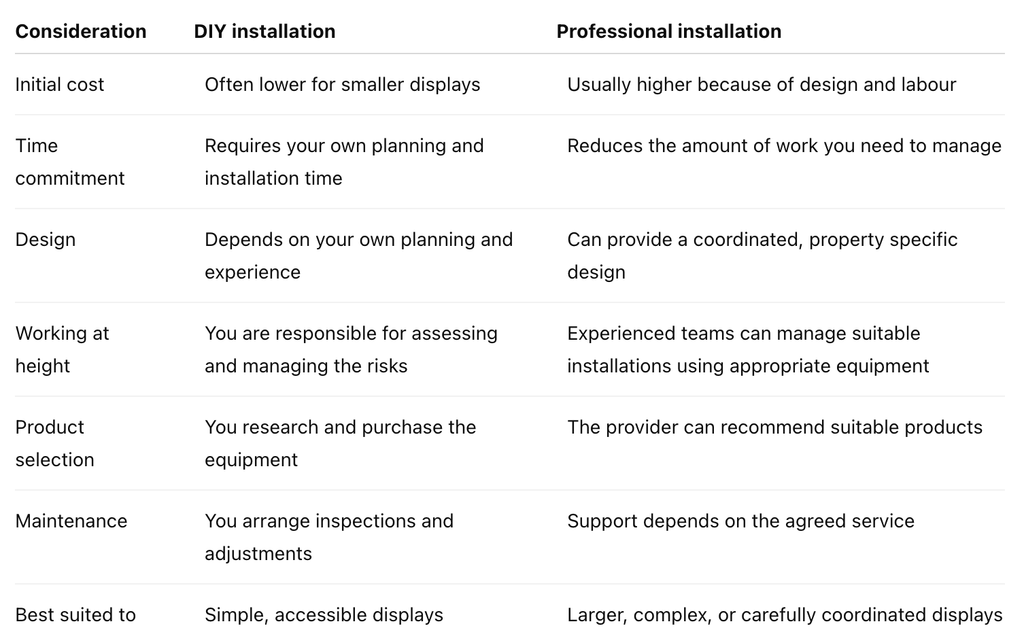
The best option is not necessarily the least expensive one upfront. Consider the time involved, the equipment required, the complexity of your design, and the potential risks of installing lights in difficult locations.
Professional Holiday Lighting for Homes and Businesses
Residential and commercial properties often have different lighting requirements.
For homeowners, a professionally planned display can highlight rooflines, entryways, mature trees, garden paths, and architectural details. The aim is to create a welcoming seasonal atmosphere while complementing the property’s existing design.
For businesses, Holiday Lighting can help create a memorable first impression, draw attention to entrances, and make outdoor spaces feel more inviting to customers and visitors. Retail premises, offices, hospitality venues, and commercial developments may benefit from a consistent lighting scheme that reflects their brand and setting.
In both cases, effective design considers more than the lights themselves. Placement, colour temperature, brightness, cable routing, controls, and the surrounding landscape all contribute to the final result.
What to Look for in a Holiday Lighting Professional
If you decide to hire a professional, look for a provider who understands both the visual and technical aspects of outdoor illumination.
Before choosing a company, consider asking:
- Do you provide a tailored design for my property?
- Are the lights and accessories suitable for outdoor conditions?
- What does the installation service include?
- Who is responsible for seasonal maintenance, repairs, removal, and storage?
- How do you address electrical safety and working at height?
- Can the display be integrated with my existing Outdoor lighting?
- What are the total costs, and are there any additional charges?
A clear scope of work helps you understand what to expect and makes it easier to compare providers fairly.
Why Choose Halo Outdoor for Professional Holiday Lighting?
At Halo Outdoor, we understand that exceptional exterior illumination begins with thoughtful design. Established in 2008, our company specialises in bespoke outdoor lighting systems for discerning residential and commercial clients.
Our in house Design, Management, and Installation team works together to take projects from concept to completion. This integrated approach helps ensure that the design, equipment, and installation work together to achieve a cohesive result.
Whether you want to enhance your home’s architectural features or create an inviting display for a commercial property, we can help you consider how seasonal decorations complement your wider Outdoor lighting scheme.
Choosing professional Lighting services can also be an opportunity to think beyond a single holiday season. A carefully planned exterior lighting system can enhance the appearance and usability of your property throughout the year, with seasonal lighting adding another layer of character when the occasion calls for it.
Which Option Is Right for You?
DIY LED holiday lights can be a rewarding choice for smaller, accessible displays. Professional Holiday Lighting services are worth considering when your plans involve difficult access, extensive coverage, a highly coordinated design, or a desire to minimise the time and effort involved.
Whichever option you choose, prioritise suitable outdoor products, safe installation practices, and regular checks throughout the season. If you want a tailored lighting scheme that complements your property and delivers a polished finish, Halo Outdoor can help you explore the possibilities.
Creative Ways to Use LED Holiday Lights
LED holiday lights offer far more than a traditional string of lights around the Christmas tree. With a wide range of colours, shapes, brightness levels, and installation options available, they can transform outdoor spaces into inviting, festive environments that reflect your personal style.
Whether you want to create a warm welcome at your front entrance, highlight your home’s architecture, or make a commercial property stand out during the holiday season, thoughtful lighting can make a significant difference. The key is to combine decorative elements with your existing Outdoor lighting to create a display that feels balanced, attractive, and purposeful.
Here are some creative ways to make the most of LED holiday lights around your property.
1. Highlight Rooflines and Architectural Features
One of the most recognisable holiday lighting designs is a clean line of lights following the roofline. This simple approach creates a defined silhouette after dark and helps your property stand out without overwhelming its appearance.
LED holiday lights can also highlight other architectural details, including:
- Roof edges, eaves, and gables.
- Window frames and doorways.
- Porch columns and entrance arches.
- Garages, pergolas, and covered outdoor areas.
- Decorative features that give your property its distinctive character.
For a refined look, choose a consistent light colour and keep the spacing even. Warm white lighting creates a welcoming atmosphere, while cool white can deliver a crisp, contemporary appearance.
For larger homes or properties with complex rooflines, professional installation can help achieve a neat, consistent finish while reducing the risks associated with working at height.
2. Wrap Trees and Shrubs in Festive Light
Garden lighting provides an opportunity to create depth and visual interest beyond the house itself. Wrapping suitable trees and shrubs in LED holiday lights can bring the landscape to life, particularly when the surrounding garden is less prominent during winter.
Consider these approaches:
- Tree trunks and branches: Use lights to emphasise the natural shape of selected trees.
- Evergreen shrubs: Add subtle illumination to create layers of light throughout the garden.
- Hedges and planting borders: Outline sections of the landscape to create a coordinated display.
- Focal point trees: Highlight one prominent tree rather than decorating every plant.
Choose lights and installation methods that are appropriate for the plant and outdoor conditions. Avoid tightly constricting branches or damaging bark, and remove seasonal decorations carefully to minimise harm to the landscape.
For a more sophisticated effect, combine decorative lights with permanent landscape lighting that highlights tree structure and garden features throughout the year.
3. Create a Welcoming Front Entrance
Your front entrance is often the first feature visitors notice, making it an ideal place to focus your holiday lighting design.
LED holiday lights can frame a doorway, illuminate porch columns, or add a festive touch to entrance greenery. You can also combine lights with wreaths, garlands, and seasonal planters to create a cohesive arrangement.
To achieve a welcoming effect:
- Frame the entrance with a consistent style of lighting.
- Use warm white lights for a relaxed, inviting atmosphere.
- Keep steps, paths, and doorways clear of loose cables and decorative obstructions.
- Ensure that decorative lights do not replace appropriate functional lighting for safe access.
- Coordinate the display with existing wall lights and other exterior fixtures.
The result should be attractive without compromising visibility or making the entrance feel cluttered.
4. Illuminate Garden Paths and Outdoor Living Areas
Outdoor spaces can still be appealing during the holiday season, even when temperatures drop. Carefully positioned LED holiday lights can define garden paths, brighten sheltered seating areas, and make outdoor entertaining spaces feel more inviting.
Ideas include outlining a pergola, decorating a covered patio, or adding subtle festive illumination to suitable garden structures.
However, decorative string lights should not be treated as a substitute for proper pathway or security lighting. Where people need to walk, use suitable permanent fixtures to provide reliable illumination and help reduce trip hazards.
For outdoor living areas, make sure all lights, connectors, and controls are rated for their intended location. Follow manufacturer guidance on weather exposure, mounting, and electrical connections.
5. Choose a Colour Scheme That Suits Your Property
Colour can influence the entire character of your holiday display. Rather than combining every available colour, choose a palette that complements your home’s exterior, landscaping, and existing lighting.
Here are a few popular approaches:
- Warm white: Classic, understated, and well suited to traditional and contemporary properties.
- Cool white: Bright and crisp, ideal for a clean, modern appearance.
- Multicoloured lights: Playful and vibrant, particularly effective for family homes and festive gathering spaces.
- Single accent colours: A restrained use of colour can highlight selected features without making the display feel busy.
- Coordinated tones: Combining compatible colours across the roofline, entrance, and landscape creates a more unified result.
Consistency is particularly important when using several sets of lights. Differences in colour temperature or brightness can make a display appear uneven, so check that products are compatible before purchasing them.
6. Use LED Holiday Lights for Commercial Properties
Seasonal lighting can help businesses create a memorable environment for customers, staff, and visitors. A well planned display can highlight architectural details, reinforce a brand’s visual identity, and make an entrance feel more inviting during the holiday season.
For commercial properties, consider illuminating:
- Main entrances and reception areas.
- Building outlines and prominent architectural features.
- Landscaped grounds and selected trees.
- Outdoor dining or hospitality spaces.
- Retail windows and suitable decorative structures.
- Arrival areas where a welcoming first impression matters.
Commercial displays should reflect the character of the business rather than simply maximise the number of lights. A restrained, coordinated design may be more effective than an elaborate arrangement that competes with signage or surrounding architecture.
Halo Outdoor works with residential and commercial clients to develop bespoke lighting systems that suit each property’s layout and objectives. Our integrated Design, Management, and Installation team can help plan a display that complements existing features and supports a consistent overall appearance.
7. Combine Seasonal Decorations With Permanent Outdoor Lighting
One of the most effective ways to elevate your holiday display is to combine temporary decorations with permanent Outdoor lighting.
Permanent architectural lights can highlight walls, entrances, pathways, and landscaping throughout the year. During the festive season, decorative LED lights can add colour and character to selected areas without requiring a complete redesign of the property’s exterior illumination.
For example, you could combine permanent pathway lights with illuminated trees, or use existing architectural lighting to complement a seasonal roofline display.
This layered approach offers several advantages:
- It creates depth by combining different lighting positions.
- It helps maintain visibility around entrances and pathways.
- It allows seasonal decorations to work alongside everyday lighting.
- It can make future holiday displays easier to plan.
- It creates opportunities to use the same outdoor space in different ways throughout the year.
A cohesive design considers the brightness, colour, positioning, and purpose of each light source. Professional Lighting services can help bring these elements together into a practical and visually consistent scheme.
8. Add Subtle Lighting to Fences, Gates, and Garden Structures
Fences, gates, pergolas, and other garden structures can provide useful boundaries for a festive display. Adding LED holiday lights to these features can help connect the lighting around your home with the wider landscape.
Consider outlining a gate, accenting a pergola, or adding a modest line of lights along a suitable fence. These features can be particularly effective when the main house display is simple and you want to extend the festive atmosphere into the garden.
Always use suitable mounting accessories and avoid damaging timber, masonry, or other surfaces. Ensure that lights do not obstruct gates, interfere with moving components, or create hazards for people using the space.
9. Keep Your Display Elegant Rather Than Overcrowded
More lights do not necessarily create a better result. A display can feel cluttered when too many colours, patterns, or competing focal points are used together.
To achieve a balanced design, start with one or two prominent features, such as the roofline and front entrance. Then introduce additional lighting to selected trees, pathways, or architectural details where it adds value.
It also helps to consider how your property looks from the street and from inside the home. A display that is attractive from multiple viewpoints will feel more carefully planned than one designed around a single angle.
Before installing everything, sketch your layout and decide which features should draw the most attention. This simple step can help you avoid unnecessary purchases and create a more cohesive result.
Bring Your Holiday Lighting Vision to Life With Halo Outdoor
Creative LED holiday lights can transform a property, but the most successful displays are built around the features that make each space distinctive. Architectural details, mature trees, garden pathways, and welcoming entrances can all become part of a coordinated lighting scheme.
At Halo Outdoor, we have specialised in bespoke outdoor lighting since 2008. Our team combines design expertise with project management and installation to help residential and commercial clients create distinctive lighting systems from concept to completion.
Whether you are exploring festive decorations or considering a broader Outdoor lighting project, thoughtful planning can help you achieve a display that looks impressive during the holidays and complements your property for years to come.
Make the Most of LED Holiday Lights
LED holiday lights are an excellent way to bring warmth, character, and festive charm to your home or commercial property. From highlighting architectural features and illuminating garden trees to creating a welcoming entrance, the right lighting design can transform your outdoor space throughout the holiday season.
Choosing LED lights offers several benefits, including lower energy consumption and reduced heat output compared with traditional incandescent lights. However, safety should always come first. Select products designed for outdoor use, follow the manufacturer’s installation instructions, inspect your lights regularly, and switch them off when appropriate. If your display involves difficult access, complex wiring, or extensive coverage, professional installation can help you achieve an attractive result while addressing important safety considerations.
Beyond seasonal decorations, well planned Outdoor lighting can enhance your property’s appearance, improve visibility, and create inviting spaces throughout the year. Combining festive accents with a carefully designed permanent lighting system can also help you make the most of your investment long after the holidays have passed.
Bring Your Outdoor Lighting Vision to Life With Halo Outdoor
At Halo Outdoor, we believe exceptional lighting begins with thoughtful design and expert execution. Established in 2008, we specialise in bespoke outdoor lighting systems for discerning residential and commercial clients, with an in house team covering Design, Management, and Installation from concept to completion.
Whether you are planning a festive lighting display or looking to transform your property’s exterior with a comprehensive lighting scheme, our team can help you explore the possibilities and find an approach that complements your space.
Ready to elevate your outdoor space with professionally designed lighting?
Contact Halo Outdoor to discuss your project and discover how our tailored Lighting services can bring your vision to life. From distinctive architectural features to beautifully illuminated landscapes, let us help you create an outdoor environment that makes a lasting impression throughout the holidays and beyond.